
Why are my eyes dry but also watering? It could be conjunctivochalasis
It sounds contradictory. Your eyes feel dry, gritty or uncomfortable, yet at the same time they keep watering.
For some people, the explanation may not simply be a lack of tears. The problem can be caused by the way the surface of the eye itself has changed.
One condition that can cause this is conjunctivochalasis, often shortened to CCh.
It is common, particularly as we get older, but it can easily be overlooked because the changes can appear quite subtle during a routine eye examination.
What is conjunctivochalasis?
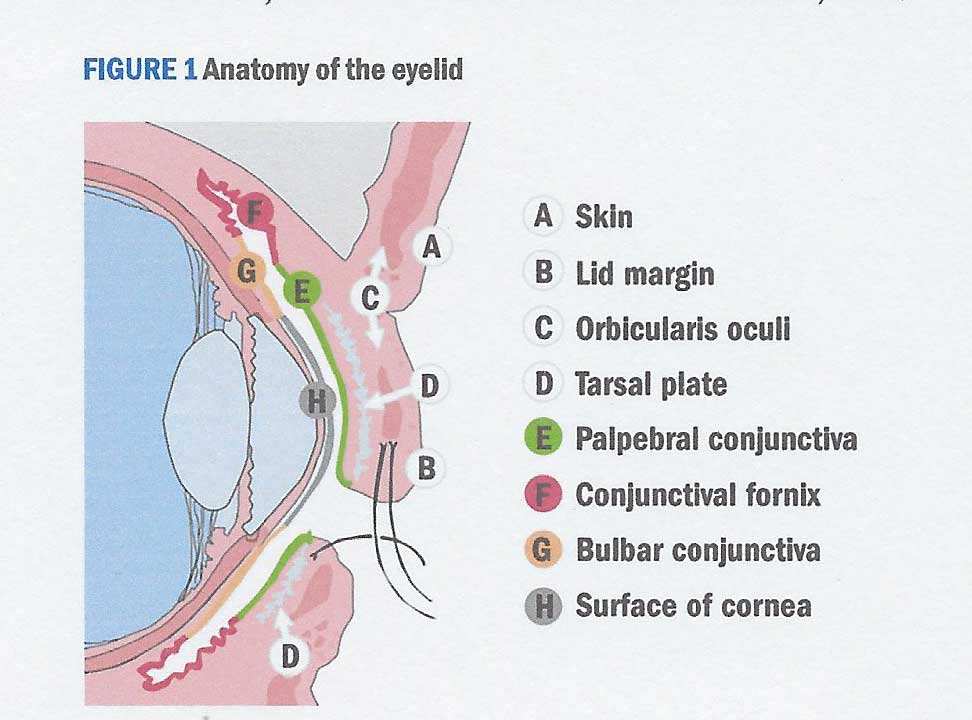
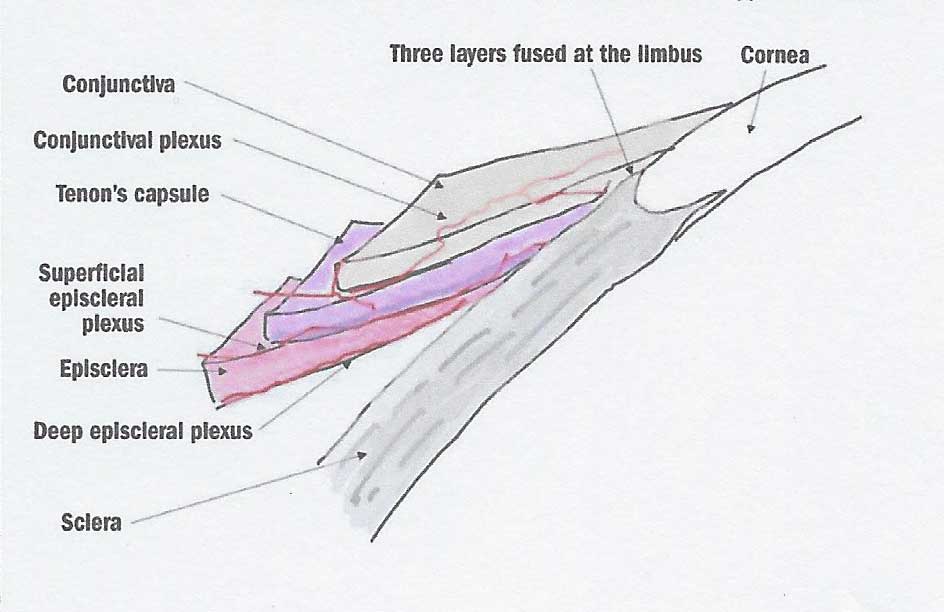
The conjunctiva is the thin, transparent tissue covering the white of the eye and lining the inside of the eyelids.
Far from being just a covering, it plays an important role in keeping the eye comfortable and healthy. It helps tears spread across the surface of the eye, contributes to lubrication and protects the ocular surface.
With conjunctivochalasis, this tissue becomes looser and forms folds, usually along the lower part of the eye.
Think of it rather like fabric that has lost some of its tension. The tissue itself is still there, but instead of lying smoothly against the eye it can bunch or fold.
And that matters because those folds can interfere with the normal movement of tears.
How can watery eyes actually be a dry eye problem?
Normally, each blink spreads tears smoothly across the eye before they drain away.
If loose conjunctival tissue interrupts the tear reservoir along the lower eyelid, the tears may no longer spread or drain normally.
Some areas of the eye may therefore become poorly lubricated while tears collect in others.
The result can be the rather confusing combination of:
- watery eyes
- dryness or grittiness
- a feeling that something is in the eye
- intermittent irritation
- fluctuating or blurred vision
- discomfort when looking down or reading
- staining or inflammation on the lower surface of the eye.
Sarah describes conjunctivochalasis as an important structural contributor to dry eye symptoms. In other words, sometimes the problem is not simply how many tears your eyes produce, but whether the surface of the eye is allowing those tears to work properly.
Why can it be missed?
Conjunctivochalasis is strongly associated with ageing, and mild folds in the conjunctiva can simply be regarded as a normal age-related change.
For many people they cause no difficulty at all.
The important question is whether those folds are actually interfering with tear movement or causing symptoms.
This is particularly worth investigating when somebody has already received appropriate treatment for dry eye or meibomian gland dysfunction but still experiences watering, irritation or fluctuating vision.
Rather than simply adding another bottle of eye drops, we need to ask why the eye is still unhappy
How is conjunctivochalasis diagnosed?
A specialist dry eye examination allows us to look closely at the lower conjunctiva and the tear film.
Sarah is our internationally renowned dry eye expert and she recommends examining the eye in different positions, particularly looking down, as the folds can become more apparent. Fluorescein dye can also help show whether the normal tear meniscus has been interrupted and whether tears are pooling around the folds.
We will also look for other conditions that may be contributing to symptoms, including meibomian gland dysfunction, blepharitis, allergy or inflammation.
Can it be treated?
Treatment depends on how significant the conjunctivochalasis is and, crucially, whether it is actually causing the patient’s symptoms.
For mild cases, treatment may initially concentrate on improving the overall health of the ocular surface. This can include lubricating drops and treatment of associated dry eye, eyelid inflammation or meibomian gland dysfunction.
However, lubricants cannot physically remove redundant conjunctival tissue.
Where the folds themselves are causing significant mechanical disruption, a procedure to reduce the excess tissue may sometimes be considered.
Sarah’s clinical article discusses plasma-based conjunctivoplasty, a minimally invasive technique that uses controlled plasma energy to shrink selected areas of redundant conjunctiva.
Early published research is encouraging, but this is not a treatment for every person with dry eye. Careful diagnosis and patient selection are essential, and any other ocular surface problems still need to be treated appropriately.
Sometimes we need to look beyond ‘dry eye’
Modern dry eye care is becoming much more individual.
Two people describing exactly the same symptoms may have very different underlying causes, which is why effective treatment begins with understanding what part of the ocular surface system is not working properly.
Conjunctivochalasis is a good example.
Something as apparently insignificant as a small fold of transparent tissue can alter tear distribution, interfere with drainage and create surprisingly persistent symptoms.
So if you have been treating dry or watery eyes for some time without getting the improvement you expected, it may be worth taking another look.